
As the weather cools and Delaware’s parks, trails, and neighborhoods become perfect for strolls, there’s nothing better than heading out with your dog. But if those outings turn into pulling, lunging, and frustration, it’s time to rethink your walking strategy.
Loose leash walking isn’t just a nice-to-have. It’s a core obedience skill that allows your dog to explore the world without dragging you through it. Whether your fall plans include farmers markets, hiking trails, or just evening strolls through the neighborhood, now is the time to reinforce this essential behavior.
What Is Loose Leash Walking?
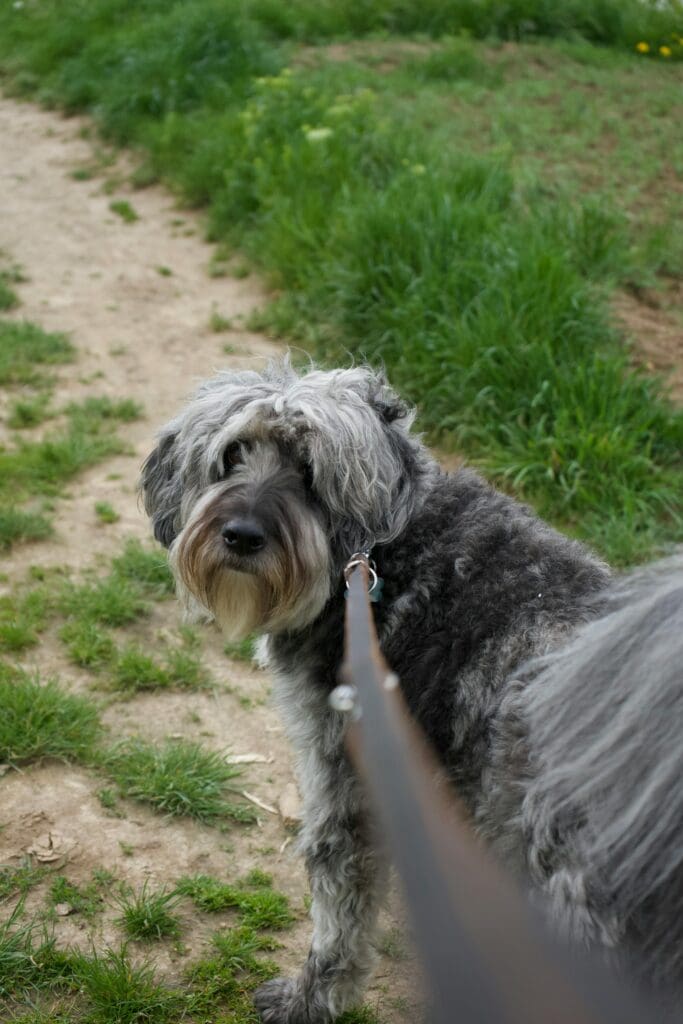
Loose leash walking means your dog walks beside you or slightly ahead with slack in the leash. They’re aware of your pace and direction, and they respond to your movement without pulling or resisting. It’s different from a formal “heel,” which is more precise.
With loose leash walking, the goal is simple:
- No tension on the leash
- No constant corrections
- Mutual respect and communication
Why It Falls Apart in Real Life
If your dog walks fine in the driveway but pulls like a sled dog the moment you reach the sidewalk, you’re not alone. The problem is usually a lack of structure, not excitement.
Common causes of pulling:
- Inconsistent leash handling
- Letting your dog lead most walks
- Reinforcing pulling by allowing forward movement
- Using the wrong equipment
Our Basic Obedience Program is designed to teach dogs how to walk politely under real-world distractions, not just in ideal conditions.
Start Indoors, Then Add Layers
Begin loose leash walking inside where distractions are minimal. Once your dog understands the concept, slowly add complexity:
- Train in your hallway or backyard with frequent rewards for staying near you.
- Add movement changes like turns, stops, and speed shifts to keep your dog engaged.
- Practice in the driveway, then walk past the house without going too far.
- Increase distractions over time: different surfaces, noises, and scents.
Always reward calm walking and correct pulling immediately by stopping or changing direction.
Pick the Right Gear
Your equipment plays a big role in walking success. Choosing the right leash and collar or harness can make all the difference.
The American Kennel Club breaks down the pros and cons of harnesses vs. collars, and it’s important to match your gear to your dog’s behavior and training needs.
In our training programs, we often recommend:
- A 4-6 ft standard leash (no retractables)
- A well-fitted collar or prong collar for structured training
- A front-clip harness for dogs that need extra guidance without force
Avoid gear that encourages pulling, like bungee leashes or back-clip harnesses for strong dogs.
Use Markers to Shape Behavior
Timing is everything. Use verbal markers to communicate clearly with your dog:
- “Yes” to mark correct walking position and offer a treat
- “Good” to encourage continued behavior without a reward every time
- “No” or “Uh-uh” when they pull or surge ahead
This clarity helps your dog understand exactly what earns freedom and praise.
To sharpen your timing and leash handling, we also recommend checking out our post on choosing the right leash and collar for your dog.
Turn Walks Into Training Opportunities
Every walk is a chance to reinforce obedience. Don’t just go through the motions. Mix it up with:
- Sudden turns or changes of pace
- Practice “sit” at every stop sign or street corner
- Add short “place” or “down-stay” drills in quiet areas
- Work around distractions like squirrels, dogs, and joggers
Engagement should be your focus. A mentally active dog is less likely to pull out of boredom or overstimulation.
Problem Solving: What to Do When Your Dog Pulls
Here’s how to respond when things go sideways:
- If your dog pulls forward: Stop moving. Wait until they release tension, then proceed.
- If they lunge at distractions: Redirect with a sharp “off” and a turn. Gain focus before continuing.
- If they fixate: Create space. Step back or to the side and use obedience to re-engage their brain.
Never let your dog “win” by pulling toward something they want. That only reinforces the behavior.
Consistency Creates Freedom
Loose leash walking isn’t just about manners. It creates freedom. A dog who can walk calmly earns more access to parks, trails, stores, and adventures. A dog who pulls constantly stays home more often.
Our Basic & Advanced Obedience Program is ideal for owners who want to enjoy fall outings without leash battles or frustration. We train dogs to walk under control no matter the environment.
Final Call to Action
If your fall adventures are being cut short by leash drama, let us help. Off Leash K9 Training Delaware specializes in structured, distraction-proof leash training that sets your dog up for success in the real world.
Contact us today to schedule your training session and take the first step toward calmer, more enjoyable walks.